.png)

City Registration (Anmeldung) in Germany: Process, Deadlines, and Documents for Internationals (2026)
.webp)
City Registration (Anmeldung) in Germany: Process, Deadlines, and Documents for Internationals (2026)
Written by Isma Khalid
Moving to a new country is an incredible milestone, but we know it often comes with a long list of "to-dos" that can feel a bit overwhelming. In Germany, the very first step to making your move official is a process called Anmeldung. Whether you are here for a new job, a degree, or a fresh start, registering your address is what truly connects you to your new community.
This guide breaks down everything you need to know about city registration in Germany in 2026.
What is Anmeldung and Why is it Mandatory?
In Germany, the law (specifically the Federal Act on Registration) requires every resident to inform the local government where they live. This process is called Anmeldung. It isn’t just a formality; it is the foundation of your legal existence in the country.
Without a registration certificate, known as a Meldebescheinigung, you will find it nearly impossible to:
- Open a German bank account.
- Receive your Tax ID (Steueridentifikationsnummer), which is required for your employer to pay you.
- Recieve the health insurance card and social security number
- Apply for your residence permit (Aufenthaltstitel).
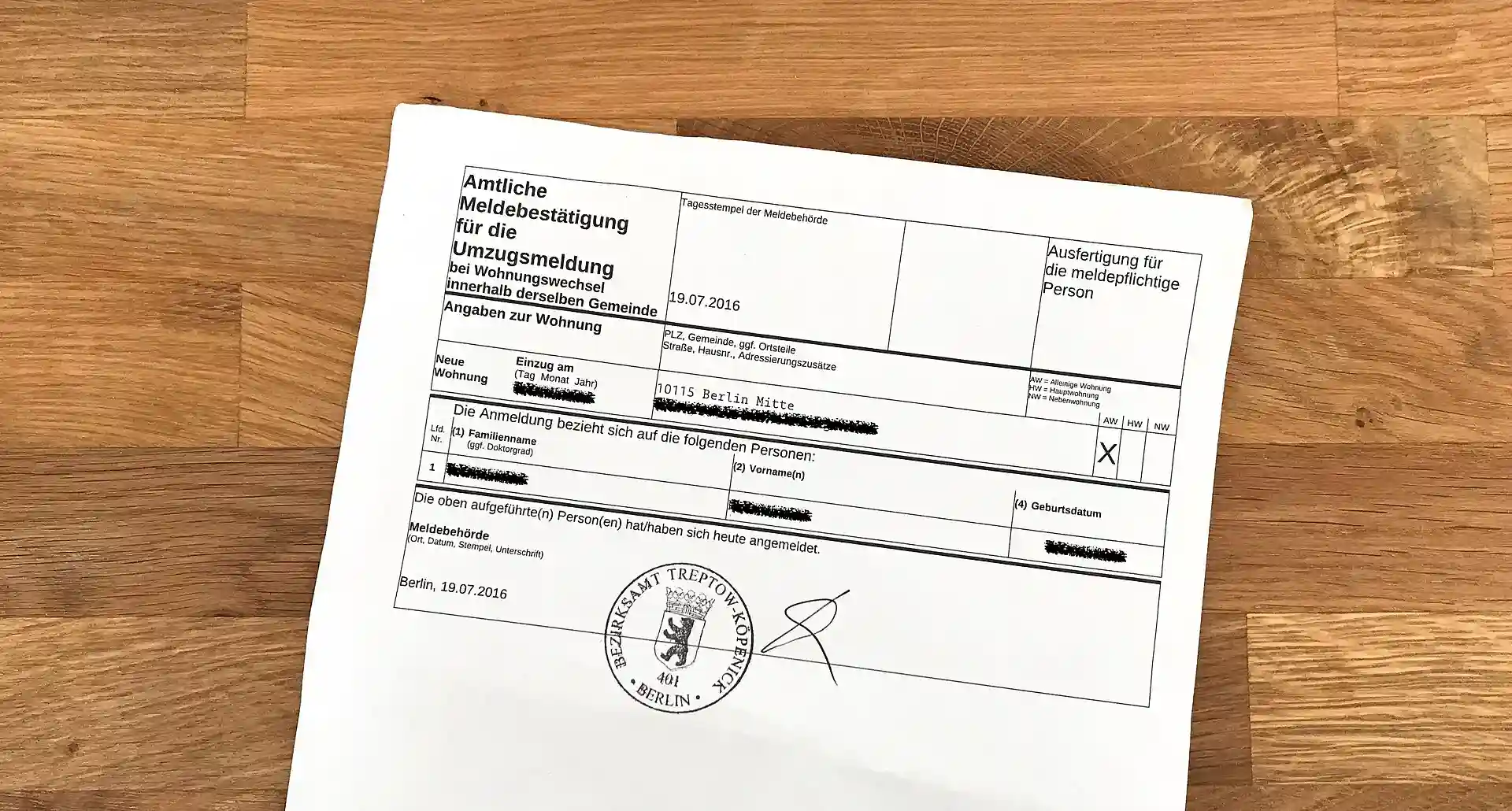
A sample of Meldebescheinigung
The 14-Day Rule
You are legally required to register within 14 days of moving into your permanent or long-term accommodation. While some cities are more lenient due to appointment shortages, missing this window can technically result in fines ranging from €25 to €1,000.
However, given the difficulty of finding accommodation and current shortage of appointments in major cities, we haven’t actually heard of anyone getting fined for a slight delay. Most officials are understanding if you can show that you tried to search for an accommodation or book an appointment early. That said, it can still happen if you wait months without a valid reason, so it’s always best to secure your slot as soon as possible.
Stressed About Finding a Flat in Time?
Meeting the 14-day registration deadline is impossible without an address. Let VisaFlow handle the pressure for you. With our 1-month full-service housing package, we actively run your search, talk to German landlords on your behalf, and prepare a flawless rental application for you.
Essential Documents for Your Appointment
To ensure your appointment at the Bürgeramt (Citizens’ Office) goes smoothly, you must bring the original versions of the following documents:
1. Valid ID or Passport
EU citizens can use a national ID card, but non-EU citizens must bring their passport along with their current visa or entry stamps.
2. The Wohnungsgeberbestätigung (Landlord Confirmation)
This is the most critical document. It is a specific form signed by your landlord or the person providing your accommodation confirming you have moved in.
Please note: A signed rental contract (Mietvertrag) is usually not sufficient on its own; you must have this specific confirmation form.
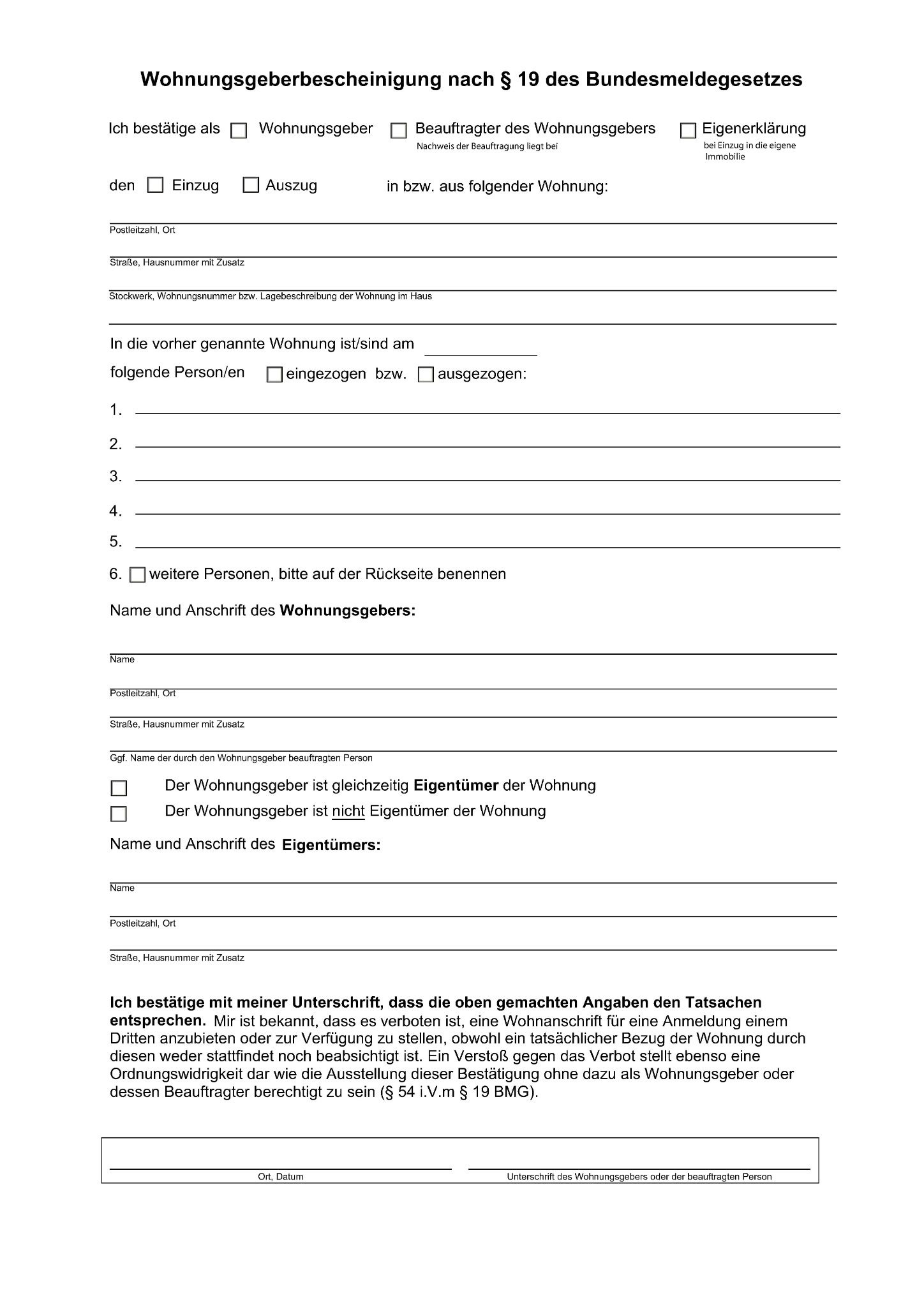
A sample of Wohnungsgeberbestätigung
3. The Registration Form (Anmeldeformular)
Most cities provide this form online on their official municipal website. You should print and fill this out before arriving to save time. Mostly, professional landlords have this document already filled out for you on the day you move in.
4. Civil Status Documents
If you are registering as a family, you must bring marriage certificates and birth certificates for children. If these documents are not in German or English, they may need to be officially translated.
Step-by-Step: How to Register Your Address
Step 1: Secure an Appointment
As soon as you have a move-in date, head to the website of your local Bürgeramt or Einwohnermeldeamt. In major cities like Berlin, Munich, or Hamburg, appointments can be booked weeks in advance. Many offices release a fresh batch of daily appointments or cancellations early in the morning, typically between 7:00 AM and 8:00 AM, so refreshing the booking page during this window is a highly effective strategy. Additionally, some locations still offer dedicated "walk-in" hours for those who arrive during specified hours.
Pro Tip: In most cities, you aren't restricted to the office in your specific neighborhood; you can visit any Bürgeramt within the city limits. Remote offices on the outskirts often have much better appointment availability than busy central locations.
Step 2: Attend the Appointment
Show up at least 15–30 minutes early. Most offices operate on a numbering system. When your number is called, the official will verify your documents and enter your details into the national database. During this process, they will ask you to provide a biometric signature on a digital pad, which is linked to your official record. During the meeting, you might be asked a question regarding your religious affiliation for tax purposes, as Germany collects a "Church Tax" (Kirchensteuer) of 8% to 9% on behalf of established religious communities. If you are not a member of a registered church or choose not to register as one, your tax status will be updated accordingly. The process usually takes about 15 to 20 minutes.
Step 3: Receive Your Meldebescheinigung
At the end of the appointment, the official will hand you a stamped piece of paper: your Meldebescheinigung. Keep this in a very safe place! You will need to show it frequently during your first few months in Germany.
Special Considerations for 2026
Digital Registration
While Germany is famous for its love of paper, some municipalities are beginning to offer digital registration via the BundID or other service accounts. However, this typically requires an electronic ID (eID) function, which most newcomers will only receive after their first residence permit is issued. For your very first registration, an in-person visit is almost always required.
Moving Within Germany (Ummeldung)
If you move from one German city to another, you don't need to "deregister" from your old city. You simply register at your new one, and the system updates automatically. This process is called Ummeldung.
Leaving Germany (Abmeldung)
If you decide to leave Germany permanently, you must deregister (Abmeldung). This is vital for canceling contracts like gym memberships, insurance, and the mandatory TV tax (Rundfunkbeitrag).
What Comes After Registration?
The Anmeldung is the "Master Key" to Germany, but it's only the first door. Once you have that paper in hand, a cascade of other tasks follows: getting your Tax ID, health insurance card , and social security number, choosing the right bank, and navigating the nuances of the German social system.
Don't let the "Bureaucracy Blues" slow you down. We’ve built a dedicated tool to help you navigate every single milestone of your move.
🚀 Master Your Move with the VisaFlow "Setting Up in Germany" Path
Why spend hours on forums when you can have a tailor-made strategy?
Our Setting Up in Germany Path is a high-speed roadmap designed to handle your first steps in Germany. From figuring out Tax ID to securing the best insurance for your visa type, we provide the exact moves you need to make to go from "just arrived" to "fully settled." "fully settled."
%20(1).webp)
An overview of “Setting Up in Germany” personal action plan
Can I do city registration in two cities?
Yes, it is possible. You will have to declare one as your primary residence (Hauptwohnsitz) and the other as a secondary residence (Nebenwohnsitz). Just keep in mind that many cities charge a secondary residence tax (Zweitwohnungsteuer), so it’s worth checking the local costs first.
Can I register in a city different from my university city?
Yes, you can. The Bürgeramt only requires that you are actually living at the address you provide. However, keep in mind that you must apply for your residence permit at the Foreigners' Authority (Ausländerbehörde) of the city where you are registered. If you live very far from your university, immigration officials might ask for proof of how you are attending classes to ensure you are still meeting the requirements of your student visa.



.webp)