.png)

Moving to Germany 2026: First Steps for International Students & Expats
.webp)
Moving to Germany: The Ultimate First-Step Guide to Settling In (2026)
Written by Isma Khalid
Moving to Germany is a thrill, but let’s be honest: the paperwork can feel like a final boss in a video game you didn't realize you were playing. Between the legendary German bureaucracy and the struggle to find an appointment, the "settling in" phase can get overwhelming fast.
At VisaFlow, we’ve seen thousands of expats navigate this transition. Whether you’re here for a high-tech job in Berlin or a Master’s degree in Munich, the steps to becoming a "registered" resident are largely the same. To help you hit the ground running, we’ve put together the ultimate guide to your first 30 days in Deutschland.
1. The Golden Ticket: Anmeldung (Address Registration)
In Germany, the law is simple: if you live here, the government needs to know where. This process is called Anmeldung. By law, you are supposed to register within 14 days of moving into your permanent or long-term temporary accommodation. One very important document is the Wohnungsgeberbescheinigung, a confirmation form from your landlord (or the person providing your accommodation). Without this document, you cannot complete your registration.
You must take this form, along with your passport and registration form, to the Bürgeramt (citizens’ office) to complete your Anmeldung.
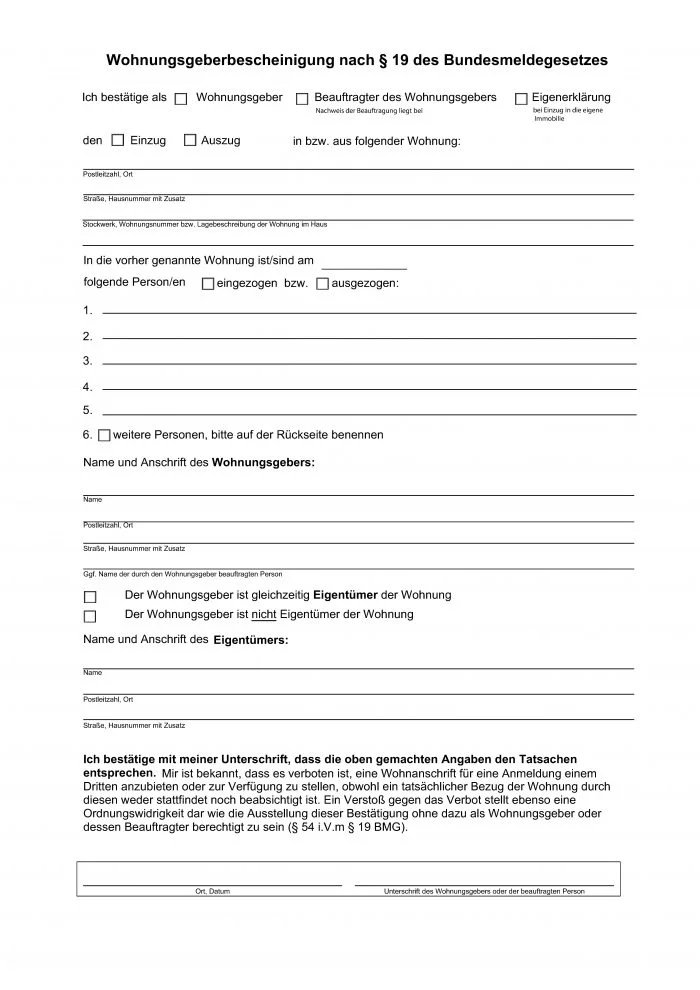
Why is it so important?
Without your Meldebescheinigung (registration certificate), you effectively don't exist in the eyes of the system. You cannot:
- Open a traditional bank account.
- Get a tax ID (Steuer-ID).
- Sign a long-term internet or mobile contract.
- Apply for your residence permit (Aufenthaltstitel).
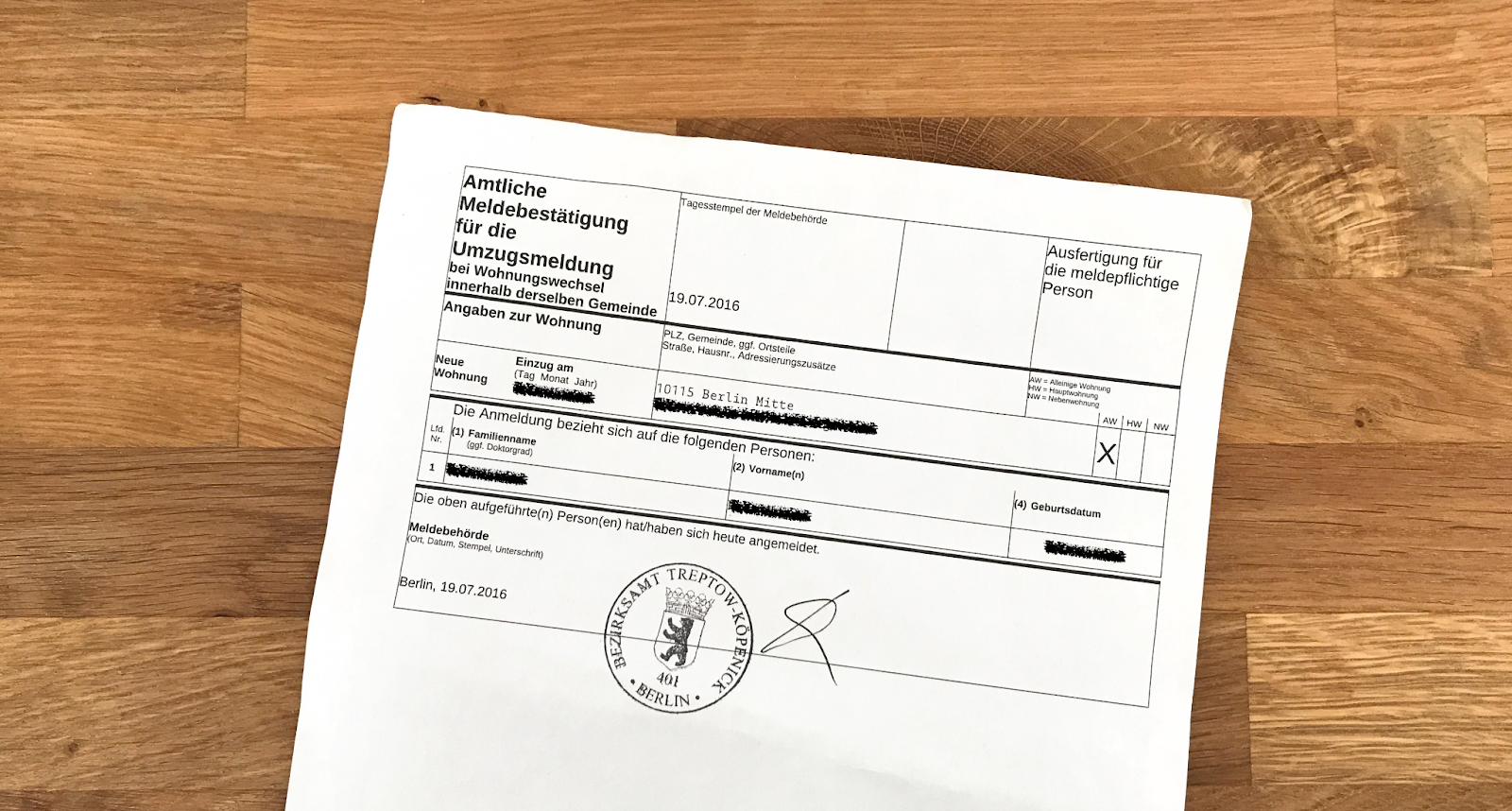
Example of a Meldebescheinigung
What you need:
- Your Passport (and visa, if applicable).
- Wohnungsgeberbestätigung: This is a specific form signed by your landlord confirming you’ve moved in. A rental contract alone is usually not enough!
- Application Form: Available at the Bürgeramt (Citizens’ Office) or on their website.
2. Navigating the Bureaucracy with Ease
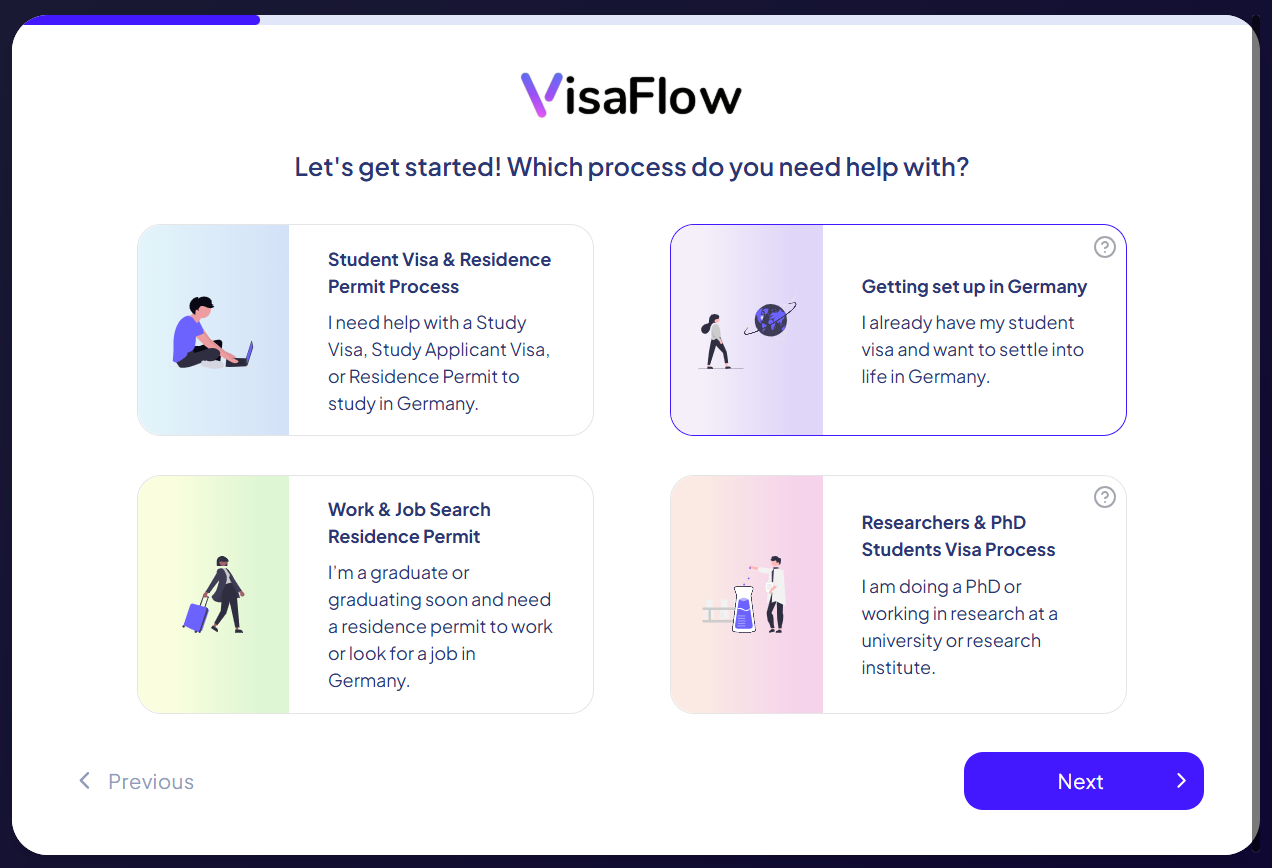
If all this sounds like a lot of heavy lifting, don’t worry, you don’t have to do it alone. VisaFlow is there to simplify these hurdles. We provide personalized checklists, document verification, and step-by-step guidance tailored to your specific visa type.
The best part? The entire "Getting Set Up in Germany" path is completely free of cost to use. Simply sign up for free and select the "Getting Set Up in Germany" module to unlock your roadmap. We believe starting your life in a new country shouldn't be gated behind expensive consulting fees.
3. Opening Your Bank Account
Once you have your registration certificate, it’s time to secure your finances. Germany is slowly becoming more "card-friendly," but you’ll still need a European or GermanIBAN for things like rent and utilities.
- Fintech Options (N26, Revolut, Tomorrow): These are often the easiest for newcomers because they offer English interfaces and don't always require the Anmeldung immediately.
- Traditional Banks (Sparkasse, Deutsche Bank, Commerzbank): Better if you want a physical branch to visit, but they usually require your registration certificate and can be more "paper-heavy."
4. Health Insurance: Non-Negotiable
You cannot live or work in Germany without health insurance. It’s a legal requirement.
There are two main types:
1. Statutory (Public) Health Insurance – GKV (Gesetzliche Krankenversicherung)
Most employees earning below the private insurance threshold, students, and some pensioners or freelancers are covered by statutory (public) health insurance (GKV, Gesetzliche Krankenversicherung), with providers such as TK, AOK, and Barmer. The cost is split evenly between employee and employer, with the employee portion deducted directly from the paycheck if you are employed. Coverage is standardized and comprehensive, including doctor visits, hospital care, prescriptions, preventive care, and basic dental treatment. Doctors and hospitals bill the insurer directly, which minimizes paperwork for you, and non-working spouses and children are generally included at no extra cost. Once you sign up, you receive your Social Security Number (Sozialversicherungsnummer), which your employer will require on your first day.
2. Private Health Insurance – PKV (Private Krankenversicherung)
Private health insurance (PKV, Private Krankenversicherung) is available to employees earning above the annual threshold (2026: 77,400 € gross/year), self-employed or freelance professionals, and some students under specific conditions, such as prior private coverage. The cost of PKV depends on factors like age, health status at the time of enrollment, chosen coverage level, and deductibles, rather than income. Coverage can vary widely and often includes additional benefits, such as private hospital rooms, advanced dental care, and preventive screenings. Billing usually requires you to pay medical expenses upfront and then submit claims for reimbursement, which can involve more administrative effort.
5. The Tax ID (Steueridentifikationsnummer)
You don't actually "apply" for a Tax ID. Once you complete your Anmeldung, the Federal Central Tax Office (BZSt) is automatically notified. They will generate your 11-digit ID and send it to your registered address via mail.
It usually takes 2 to 4 weeks to arrive. If your job starts before it arrives, your employer might tax you at a higher rate (Tax Class 6) temporarily, but you’ll get that money back once you provide the ID.
6. Staying Connected: SIM Cards and Internet
Getting a German phone number should be high on your list.
- Prepaid SIMs: Can be bought at supermarkets like Aldi or Lidl. You’ll need to verify your identity via a video call or at a post office.
- Contracts: Often offer better data rates but usually require a 24-month commitment and, you guessed it, your Anmeldung.
7. Public Transport and the "Deutschland-Ticket"
Unless you plan on driving (which involves a whole different set of paperwork for license conversion), you’ll be using the "U-Bahn," "S-Bahn," and trams.
The Deutschland-Ticket is currently the gold standard. For a flat monthly fee of €63 as of January 1st 2026, you get unlimited travel on all local and regional transport across the entire country. It’s a subscription model, so you’ll need that German bank account we mentioned earlier to set it up.
Final Thoughts
Settling in Germany is a marathon, not a sprint. The first few weeks involve a lot of waiting in offices and translating German letters, but once the foundation is laid, the quality of life here is incredible.
If you want to skip the confusion and ensure your relocation is perfect from the start, sign up for VisaFlow today. It’s the easiest way to manage your relocation, and since it's free to use, you can save your Euros for more important things, like your first authentic German Döner or a celebratory beer.
Welcome to Germany! Willkommen!
What are the first things to do after moving to Germany in 2026?
The most critical first steps after moving to Germany are: completing your Anmeldung (address registration) at the local Bürgeramt within 14 days, opening a German bank account, obtaining mandatory health insurance, and if you are a non-EU citizen, applying for your residence permit at the Ausländerbehörde. Doing these in order will unlock access to other essential services.
How soon do I need to register (Anmeldung) after moving to Germany?
By German law, you must register your address (Anmeldung) at the local Bürgeramt (Citizen's Office) within 14 days of moving into your permanent or long-term temporary accommodation. To register, you will need your passport and a Wohnungsgeberbestätigung (landlord confirmation form) signed by your landlord or accommodation provider. Without the Anmeldung, you cannot open a bank account or apply for a residence permit.
Do I need health insurance before I can register my address in Germany?
Health insurance is not required for Anmeldung (address registration) itself. However, it is legally mandatory in Germany for all residents and is required when applying for a residence permit, enrolling at a university, or starting a job. It is strongly recommended to arrange health insurance — either statutory (GKV) or private (PKV) — as soon as possible after arriving in Germany.



.webp)