.png)

Oldenburg Student Residence Permit 2026: Complete Guide for International Students
.webp)
Study in Oldenburg: Guide to Your Student Residence Permit (2026)
Written by Isma Khalid
Moving to Oldenburg to study at the Carl von Ossietzky University is an exciting milestone. However, the charm of the Lappan tower and the city’s bike-friendly streets comes with a side of German bureaucracy. To stay legally and focus on your studies, securing your student residence permit is your most important task upon arrival.
This comprehensive guide walks you through the residence permit process for international students in Oldenburg, updated for 2026.
Who Needs a Residence Permit in Oldenburg?
You must apply for a residence permit for study purposes (Aufenthaltserlaubnis zum Studium) if you meet the following criteria:
- You are a non-EU / non-EEA / non-Swiss citizen.
- You are enrolled at Carl von Ossietzky University.
- You intend to stay in Germany for longer than 90 days.
Most international students arrive with a National Visa (Category D) stamped on their passport as a sticker. This visa is a temporary entry permit. Within its validity period (usually 6 to 12 months), you must visit the Oldenburg Foreigners' Office to "convert" this visa into a long-term residence permit card.
Citizens of Andorra, Australia, Brazil, Canada, El Salvador, Honduras, Israel, Japan, Monaco, New Zealand, Republic of Korea, San Marino, United Kingdom of Great Britain and Northern Ireland, United States of America do not require a visa to enter Germany. However, in order to study, citizens of these countries are required to apply for a Student Residence Permit within the period of 90 days upon their arrival in Germany.
Disclaimer: Starting from April 2027, travellers who are currently exempt from visas will have to get an online travel authorization (ETIAS) before entering Germany. ETIAS can be obtained in a matter of minutes online, costs about €7, and will be valid for three years.
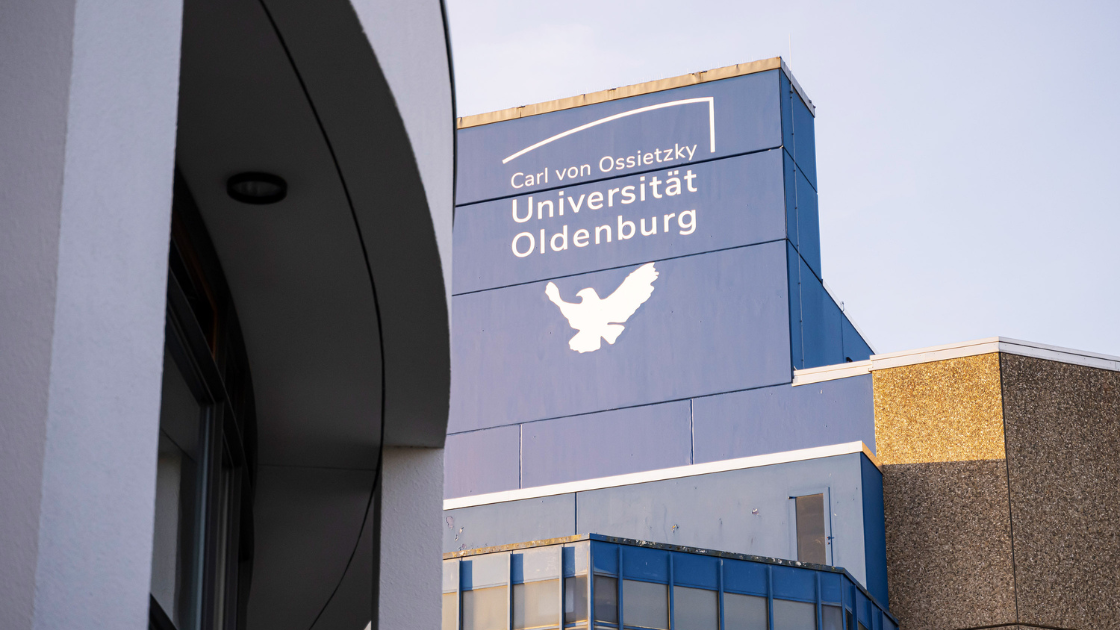
Credits: University of Oldenburg / Matthias Hornung
Step 1: Address Registration (Anmeldung)
In Germany, you cannot apply for a residence permit without first proving where you live. This is called Anmeldung.
- When: Within 14 days of moving into your room or apartment.
- Where: The Bürgerbüro (Citizens' Office) in Oldenburg. The most common locations are Bürgerbüro Mitte (Pferdemarkt) or Bürgerbüro Nord.
- Essential Document: You need the Wohnungsgeberbestätigung, a confirmation form signed by your landlord or the Studierendenwerk. Your rental contract alone is not enough.
Once completed, you’ll receive your Meldebescheinigung (Registration Certificate). This paper is "gold", you’ll need it to open a bank account and sign up for health insurance.
Step 2: Preparing Your Application
The City of Oldenburg handles student residence permits through the Hochschulservice (University Service) within the Foreigners' Office (Ausländerbehörde).
Documents Required for 2026
To ensure a smooth appointment, prepare the following:
- Valid Passport: Ensure it doesn't expire within the next 6 months.
- Biometric Photo: Must meet German government standards.
- Certificate of Enrollment: Your Immatrikulationsbescheinigung from the University of Oldenburg.
- Proof of Finance: For 2026, the standard requirement is €992 per month (usually via a Blocked Account or Sperrkonto). You can also submit a declaration of commitment, employment contract with the last three payslips, scholarship certificate or student loans).
- Health Insurance: Proof of German statutory (e.g., TK, AOK) or recognized private insurance.
- Application Fee: Usually around €100 for the initial permit.
Using VisaFlow to Simplify the Process
The University of Oldenburg offers free access to VisFlow for international students to navigate these complex steps without the headache.
You can unlock your personalized immigration roadmap and digital document check using the university’s official access code. You can get the access code by contacting the international office at the University of Oldenburg.
Why use VisaFlow?
- Complete Document Checklists: Get a comprehensive, step-by-step list of exactly what the immigration office expects. No more guessing, know precisely which forms, certificates, and proofs of finance are required for a successful application.
- Document Pre-check: Avoid being turned away from an appointment because of a missing signature.
- Digital Assistance: Step-by-step guidance for setting up your blocked account and insurance.
Step 3: Booking Your Appointment
In Oldenburg, the Hochschulservice is your primary contact. This is a specialized department within the City’s Immigration Office (Ausländerbüro) dedicated exclusively to international students and researchers.
Unlike the general immigration office, the Hochschulservice team provides tailored advice on residency permits for studies, work rights during your degree, and your legal options after graduation.
- Location: Pferdemarkt 14, 26121 Oldenburg.
- Timing: Start the process 8–12 weeks before your entry visa expires. The Oldenburg authorities are busy, and appointments can fill up fast.
- Booking: Most appointments are requested via the City of Oldenburg Service Portal.
Working While Studying in Oldenburg
As an international student in 2026, you have generous working rights, but you must follow the "140-day rule":
- Annual Limit: You can work 140 full days or 280 half days per year.
- Definition: Working more than 4 hours in a day counts as a "full day."
- Exceptions: Work as a Student Assistant (HiWi) at the university or mandatory internships do not count towards this 140-day limit.
Life After Graduation: The 18-Month Job Seeker Permit
The University of Oldenburg produces highly skilled graduates, and Germany wants you to stay! After you finish your degree, you can apply for a Job Seeker Residence Permit.
- Duration: 18 months.
- Rights: You can work any job (even outside your field) to support yourself while you look for a "qualified" position related to your degree.
Final Success Tips
- The Fiktionsbescheinigung: If your appointment is after your visa expires, don't panic. The office will issue a "Fictional Certificate" which keeps your stay legal until the final card arrives.
- Check Your Mail: Unlike many countries that use apps, German authorities still love physical mail. Make sure your name is clearly on your mailbox!
- Originals vs. Copies: Always bring the original documents to your appointment, but have a set of copies ready to hand over.
Can I start my residence permit application before I arrive in Oldenburg?
No. You must first complete your Anmeldung (address registration) at the Oldenburg Bürgerbüro. You cannot apply for a residence permit without the Meldebescheinigung (registration certificate) provided after you move into your local housing.
How many hours can I work as a student in Oldenburg in 2026?
As an international student, you are allowed to work 140 full days or 280 half days per year. Working more than 4 hours in a day counts as a "full day." Note that mandatory internships and work as a Student Assistant (HiWi) at the university do not count towards this limit.
What is a Fiktionsbescheinigung and what does it allow me to do in Oldenburg?
A Fiktionsbescheinigung is a fictional certificate issued by the Foreigners' Office when your residence permit appointment is scheduled after your current visa expires. It keeps your stay legal until your final permit card arrives. Always check which box is ticked on the certificate, as it determines your working rights during this period.


.webp)