.png)

United Kingdom (U.K.) Students’ Guide to Germany (2026)
.webp)
United Kingdom (U.K.) Students’ Guide to Germany (2026)
Written by Isma Khalid
Navigating the journey to study in Germany as a British citizen is an exciting venture, but post-Brexit, the administrative pathway requires a bit more navigation. One of the most significant advantages of holding a U.K. passport is that you are still treated as a visa-exempt national regarding your entry and stay.
Unlike many other non-EU nationalities, U.K. citizens have a choice: you can apply for a student visa at a German mission in the United Kingdom before you depart, or you can enter Germany visa-free and apply for your residence permit (Aufenthaltstitel) directly at the local immigration office (Ausländerbehörde) within 90 days of your arrival.
Choosing the right path depends on your timeline, your comfort with bureaucracy, and how quickly you need to start working once you land. This guide breaks down everything you need to know to successfully secure your right to study in Germany in 2026.
Phase 1: Finding the Right Mission (Jurisdiction)
If you choose to apply before leaving the U.K., you must apply at the German mission that has jurisdiction over your place of residence. Germany maintains two primary missions in the United Kingdom:
German Embassy London
- Address: 23 Belgrave Square, London SW1X 8PZ
- Jurisdiction: England, Wales, Northern Ireland, the Isle of Man, the Isle of Wight, the British Channel Islands, Gibraltar and the Falkland Islands (Malvinas)
- Website: http://www.uk.diplo.de
Consulate General Edinburgh
- Address: 16 Eglinton Crescent, Edinburgh EH12 5DG
- Jurisdiction: Scotland
- Website: http://www.uk.diplo.de
Note: As of 1 February 2025. The Consulate General in Edinburgh is responsible for Scotland only. Persons living in the counties of Cumbria, Durham, Northumberland, North Yorkshire and Tyne and Wear should contact the Embassy in London, as the Embassy is the responsible mission.
For certain visa categories, you may need to book your appointment via the external service provider TLScontact, which operates centers in London, Manchester, and Edinburgh.
Phase 2: The Consular Service Portal Process
The Consular Services Portal (CSP) is the established digital gateway for starting your German student visa application online. This platform allows you to manage most of your application before ever stepping foot in a consulate.
- Online Submission: Complete the application form digitally and upload all required supporting documents.
- Preliminary Review: The German mission reviews your digital files. If anything is missing, they will notify you through the portal to ensure your file is perfect before your appointment.
- In-Person Appointment: Once the review is complete, you will be invited to an in-person appointment to provide biometric data (fingerprints) and pay the fee.
Phase 3: Proof of Finances
Germany requires proof that you can support yourself without relying on the German social system. For 2026, the required amount reflects the updated cost of living.
The German missions in the United Kingdom recognize three official methods to prove your funds.
Method 1: The Sperrkonto (Blocked Account)
This is the most frequent and trusted method. You must transfer €11,904 into a specialized German bank account that is "blocked" until you arrive.
- How it works: You transfer the full amount. The bank issues a "Blocking Confirmation," which you use for your visa. Once in Germany, you are permitted to withdraw €992 per month to cover your expenses.
Method 2: Verpflichtungserklärung (Formal Letter of Obligation)
A family member or close contact who is a legal resident of Germany can sponsor you. They must visit their local Ausländerbehörde in Germany to submit a formal declaration of commitment, proving they have sufficient income to cover all your costs. There is a fee of €29 to be paid by the sponsor.
Method 3: Scholarship or Student Loan
If you have secured a full scholarship (e.g., from DAAD) or a U.K. Student Loan that indicates a sufficient maintenance component per month, these can be used as proof of funds.
Phase 4: Document Preparation
Preparation is the cornerstone of a successful application. While specific requirements can vary, the following documents are universally required for U.K. citizens:
- Valid U.K. Passport: Issued within the last 10 years, with at least two blank pages and valid for at least six months.
- Application Form: Completed and signed via the VIDEX or Consular Service Portal.
- Biometric Photos: Two recent passport-sized photos meeting German standards.
- Letter of Admission: An official Zulassungsbescheid from a German university or preparatory college (Studienkolleg).
- Academic CV: A professional or academic curriculum vitae.
- Health Insurance: Proof of German statutory or private health insurance that meets student coverage requirements.
Phase 5: The Visa Interview and Fees
The in-person appointment at the consulate involves collecting biometrics and a brief interview regarding your study plans.
- Visa Fee: The standard processing fee for a National Visa (Type D) is €75. This is usually paid in British Pounds (GBP) according to the current exchange rate at the mission.
- Payment Methods: Most missions accept credit cards (Visa/Mastercard) or cash.
- Processing Time: Most student applications are processed within two weeks after the biometric appointment.
The Alternative: Applying for a Residence Permit in Germany
Applying for a Student Visa in the U.K.
Pros: You arrive in Germany with your legal status already secured. This allows you to open bank accounts and sign rental contracts much more easily. Crucially, you can start working immediately as your student visa includes the authorization to work 140 full days per year. Cons: You must deal with appointment availability in London or Edinburgh, which can be tight during peak summer months. You also have to surrender your passport for a short period during processing.
Applying in Germany (Residence Permit)
Pros: You can move to Germany immediately without waiting for a consulate appointment. This is a great "Plan B" if you receive your university acceptance letter very late in the season.
Cons: The Ausländerbehörde in major cities like Berlin or Munich is often heavily overbooked. You cannot start working (even part-time student jobs) until your permit is physically issued, which can take months. Additionally, navigating German bureaucracy entirely in German can be daunting for newcomers.
Important Note for late 2026: ETIAS
Starting in the last quarter of 2026, U.K. students entering Germany without a pre-approved visa will be required to obtain an ETIAS (European Travel Information and Authorisation System) authorization before travel.
- Cost: €20
- Validity: 3 years
- Requirement: This is mandatory for all visa-free travelers entering the Schengen Area for short stays or before their long-term permit is issued.
Your German Student Visa. Approved. Without the Chaos.
Applying for a German student visa post-Brexit is more complex than it used to be. VisaFlow guides thousands of students through the process - with the right information, the right documents, and no unnecessary stress.
- Your Personal Action Plan: Know exactly what to do next - tailored to your nationality and visa type.
- A Motivation Letter That Works: Your Statement of Purpose drafted or refined by experts – so your application tells a clear, convincing story.
- The Right Blocked Account & Insurance: Compare providers in real-time and choose the option that fits your situation.
- Verified Information, Not Forum Rumors: Every requirement confirmed and up to date - so you never have to rely on outdated advice.
Your visa is step one. VisaFlow stays with you through your residence permit, post-grad applications, and everything in between.
Ready to start? Your Germany journey begins here.
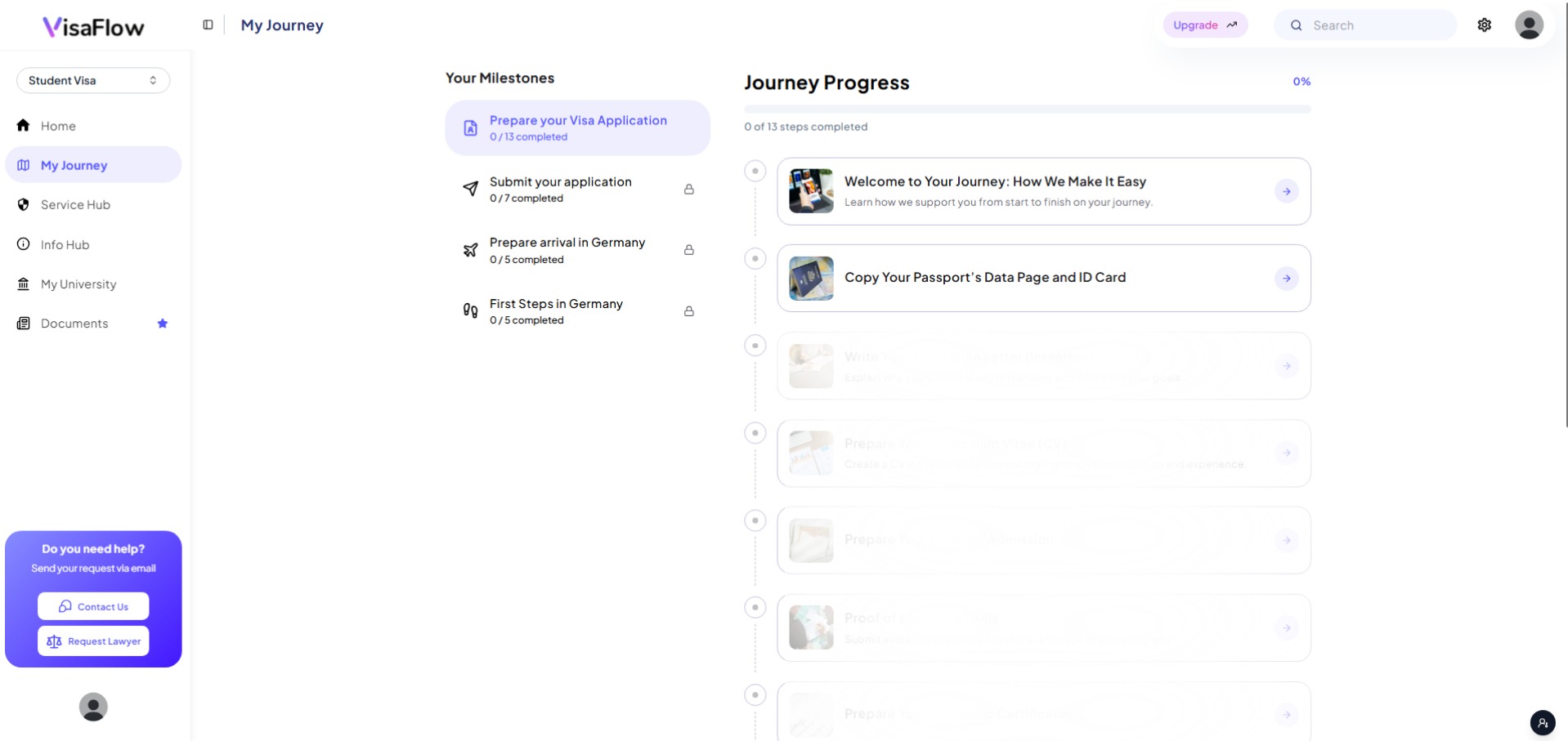
An overview of student visa personal action plan
Do I really need a visa if I'm only staying in Germany for one semester as a U.K. citizen?
If your study program or exchange placement exceeds 90 days, you need a legal residence title. While British nationals have the "privilege" of entering Germany without a visa for up to 90 days, you must apply for a residence permit (Aufenthaltstitel) at your local immigration office (Ausländerbehörde) within that first three-month window if your stay is longer.
Can I work in Germany with just my U.K. passport?
No. While you can enter visa-free as a visitor, you are not authorized to pursue "economic activity" or start a job with just your passport. You must wait until you have been issued a residence permit that explicitly authorizes employment. Once granted, student residence permits typically allow you to work 140 full days (or 280 half days) per year.
What happens if the 90-day window is ending and I don't have an appointment as a U.K. citizen in Germany?
As long as you submit your application for a residence permit (even via an official online portal or email) before your 90-day visa-free stay expires, your residence in Germany is considered lawful until a decision is made. In this case, you may receive a "fictional certificate" (Fiktionsbescheinigung).

.webp)
.webp)
