.png)

Scholarships for International Students in Germany 2026/27: The Ultimate Guide

Scholarships for International Students in Germany 2026/27: The Ultimate Guide
Written by Isma Khalid
Whether you are aiming for a master's degree in engineering or a PhD in social sciences, Germany stands as a premier global destination for higher education. For international students, the most attractive feature, aside from world-class curricula, is the availability of numerous funding opportunities. We understand that navigating the financial landscape of international study can be as complex as the visa process itself.
This comprehensive guide explores the most prestigious scholarships for international students in Germany for the 2026/2027 academic year, providing the insights you need to secure funding and launch your career in Europe.
The Landscape of Higher Education Funding in Germany
Germany is unique because most public universities do not charge tuition fees for both domestic and international students. However, living costs in German cities can be substantial, often requiring proof of financial resources (Finanzierungsnachweis) to secure a student visa. This is where scholarships become essential.
Scholarships in Germany are generally merit-based, though many foundations also prioritize social engagement, political awareness, and personal background. Funding typically covers monthly living allowances, health insurance, and sometimes travel costs.
1. DAAD Scholarships:
The German Academic Exchange Service (DAAD) is the world's largest funding organization for the international exchange of students and researchers. For the 2026 academic cycle, the DAAD offers a wide array of programs tailored to different levels of study.
Postgraduate Study Scholarships
The DAAD provides monthly payments of approximately €992 for graduates and €1,400 for doctoral candidates. These scholarships are available for nearly all disciplines, including Law, Economics, Engineering, and Art.
Key Requirements for DAAD Applicants
Selection is managed by an independent committee of specialized scientists. They evaluate three core pillars:
Academic Qualification:
The committee looks for high academic achievement, relevant work experience or internships, and the necessary language skills (either German or English) required for your specific course.
Quality of the Study Project:
Your application must demonstrate that you have thoroughly researched your choice of degree and host university. The committee assesses how well your project is prepared and how it integrates into your long-term academic career path.
Applicant Potential:
- Motivation: You must clearly articulate the academic and personal reasons for wanting to study in Germany.
- Prospects: What is the significance of this stay for your future professional development?
- Commitment: Beyond grades, the DAAD values extracurricular knowledge, social commitment, and engagement.
The committee also considers equal opportunities, and applicants are encouraged to provide relevant personal context in their application forms.
2. Deutschlandstipendium: Public-Private Partnership
The Deutschlandstipendium (Germany Scholarship) provides financial support to high-achieving students from all over the world. It is unique because it is funded half by the Federal Government and half by private donors (companies, foundations, or individuals).
What It Offers
Recipients receive €300 per month for at least two semesters. While this may not cover all living expenses, it is awarded regardless of personal or parental income, making it an excellent "top-up" for talented students.
Selection Criteria
Universities award these scholarships based on academic merit, but they also consider social commitment, such as volunteer work or participation in university politics. Overcoming personal hurdles, such as an immigrant background or a disability, is also a significant factor in the selection process.
3. Political Foundation Scholarships
Germany’s political foundations are major players in the scholarship sector. These organizations seek students who align with their core values and demonstrate leadership potential.
Heinrich Böll Foundation Scholarships
Heinrich Böll Foundation focuses on sustainability, ecology, and human rights. For 2026, the application deadlines for international students are generally March 1st and September 1st. Priority is often given to applicants from DAC (Development Assistance Committee) list countries. They seek candidates with excellent academic records who are socially and politically engaged.
Friedrich Ebert Foundation (FES)
The Friedrich Ebert Foundation (FES) is the oldest political foundation in Germany. It supports students from all academic subjects who demonstrate social democratic values. Eligibility extends to non-German students who are already studying in Germany at the time of application. The foundation places a heavy emphasis on your personal attitude and social involvement rather than just high grades.
4. Erasmus+ for International Mobility
If you are already enrolled in a university that has a partnership with a German institution, the Erasmus+ program can fund your stay in Germany for one or two semesters.
For the Winter Semester 2026/27, students must stay updated with their home university’s international office, as deadlines often fall early in the year (e.g., January 15, 2026, for some faculties). Erasmus+ provides a monthly grant to cover the "mobility gap," and students with fewer opportunities, such as those with chronic illnesses or those traveling with children, can receive additional monthly top-ups of €250.
5. Research and PhD Funding Opportunities
Germany is a global powerhouse for research. If you are pursuing a doctorate, the funding landscape shifts toward research grants.
DAAD Doctoral Research Grants
These grants support doctoral projects for 7 to 24 months, providing approximately €1,200 per month. You can choose between an individual doctorate (working with a specific professor) or a structured doctoral program (enrolling in a graduate school).
Top Research Institutions
In addition to universities, major research organizations offer their own funding and positions:
- Max Planck Society: Offers PhD positions within their International Max Planck Research Schools (IMPRS).
- Helmholtz Association: Provides funding through various research centers across Germany.
- Fraunhofer Society: Focuses on applied research, often in collaboration with industry partners.
Strategic Tips for a Successful Application
Securing a scholarship in Germany is highly competitive. To stand out in the 2026/2027 application pool, consider the following strategies:
1. Start Early and Respect Deadlines
Many scholarship deadlines occur nearly a year before the program starts. For example, the main DAAD deadline for many programs is October 15th for the following academic year. Missing a deadline by even an hour usually results in automatic disqualification.
2. Perfect Your Motivation Letter
Your motivation letter should be more than a list of achievements. It must explain why Germany is the right place for your specific goals and how you will contribute to the university community. For political foundations, highlight your social and community engagement.
3. Secure Strong Recommendations
Academic reference letters carry significant weight. You typically need two letters from university professors who can speak to your academic potential and character. Ensure your referees have enough time to write a detailed, personalized letter.
4. Verify Your Recognition (Anabin)
Before applying, ensure your current degree is recognized in Germany. You can use the Anabin database to check if your university and degree program are classified as "H+" (recognized). This is a prerequisite for most scholarships and university admissions.
Next Step: Let’s Secure Your Visa
Securing a scholarship is a monumental achievement, but it is only half the journey. To step foot on campus in 2026, you must get the Germany Student Visa or Researcher Visa. The good news is: VisaFlow has your back for the visa process. We provide a comprehensive digital platform designed to simplify the visa journey, your initial months in Germany, and even beyond.
- Your Personal Action Plan: Know exactly what to do next - tailored to your nationality and visa type.
- A Motivation Letter That Works: Your Statement of Purpose drafted or refined by experts, so your application tells a clear, convincing story.
- The Right Insurance: Compare providers in real-time and choose the option that fits your situation.
- Verified Information, Not Forum Rumors: Every requirement confirmed and up to date - so you never have to rely on outdated advice.
Your visa is step one. VisaFlow stays with you through your residence permit, post-grad applications, and everything in between.
Ready to start? Your Germany journey begins here.
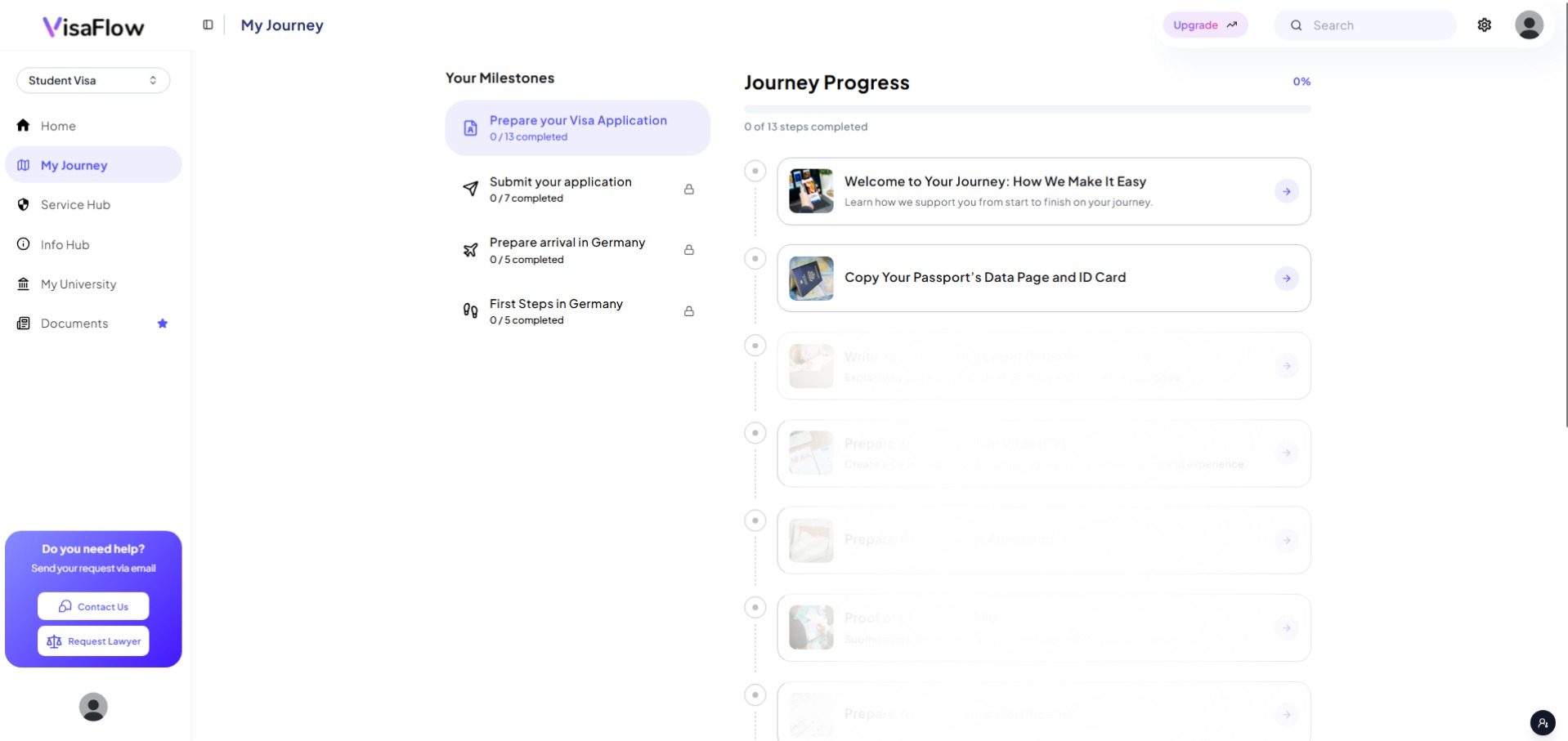
An overview of student visa personal action plan
Can I work part-time while on a DAAD scholarship?
Yes, but you must obtain approval from both the DAAD and your host institution. Earnings exceeding approximately €450–€538 per month (the current "mini-job" limit) will be deducted from your stipend.
Does the DAAD scholarship cover the tuition fees charged by some German states?
No. While the DAAD provides a comprehensive monthly stipend (e.g., €992 for Master’s students), travel allowances, and insurance, it does not cover tuition fees. Fortunately, most public universities in Germany remain tuition-free, though some states like Baden-Württemberg charge fees for non-EU students.
Is there an age limit for German scholarship applications?
Most major programs, including the DAAD, do not have a fixed age limit. Instead, they focus on the time elapsed since your last degree. For many postgraduate programs, your Bachelor's degree should generally have been completed within the last six years. Certain foundations may have specific internal guidelines, so always check the individual call for applications.

.webp)
.webp)
